Looms & Weaving
DIY Loom Reference
3D printable stuff:
Tabletop Weaving Loom Mk I
"This small, tabletop 2-heddle weaving loom is a project that I have been working on for many months now, and I've decided to share it with the world, because I think that the machine is a really cool thing that everyone interested should have access to. This tool has an effective weaving width of about 123mm and can make about 1 meter worth of fabric."
https://www.printables.com/model/1600383-tabletop-weaving-loom-mk-i
Tablet weaving card
There are tons of tablet weaving models on both thingiverse.com and printables.com
https://www.printables.com/model/1417093-tablet-weaving-card
Warp-Weighted Tablet-Weaving Loom V2
This is just a system for tensioned warp holding on a table. Can be accomplished many ways, but this has a printed pawl/ratchet mechanism.
https://www.printables.com/model/1613756-warp-weighted-tablet-weaving-loom-v2
Easy-Peasy Knitting Loom
Jig for making beanies and "bed socks."
https://www.thingiverse.com/thing:7108104
Other Rigid Heddle Looms
Thingiverse.com has many more rigid heddle designs. Some scrutiny is needed to figure out pro/cons of various designs: https://www.thingiverse.com/search?q=rigid+heddle+loom&page=1
Hybrid (printed + otherwise) DIY Plans
DF Loom: A Simple and Flexible Rigid Heddle Loom
"Rigid heddle loom with customizable width and reeds count. Combination of 3D printed parts and aluminum profiles."
Non 3D printed plans
There are sure to be many wood plans, plans that use laser cut pieces, and plans using other hardware store type supplies such as PVC, EMT tubing, etc. Instructables has a few.
Frame Loom Stuff
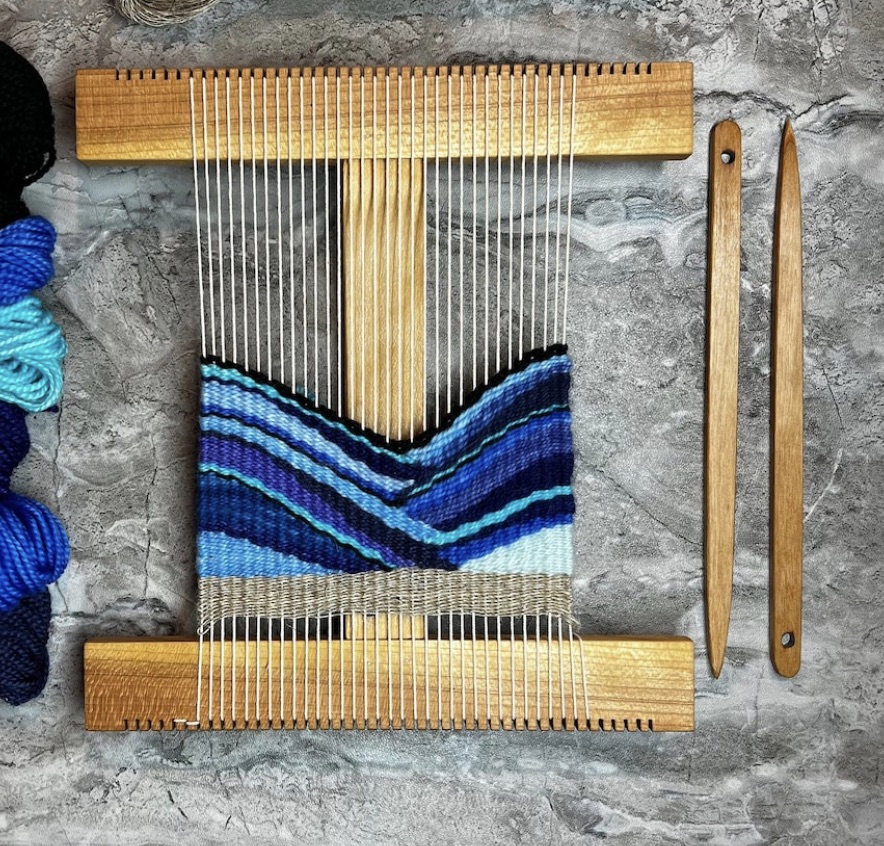
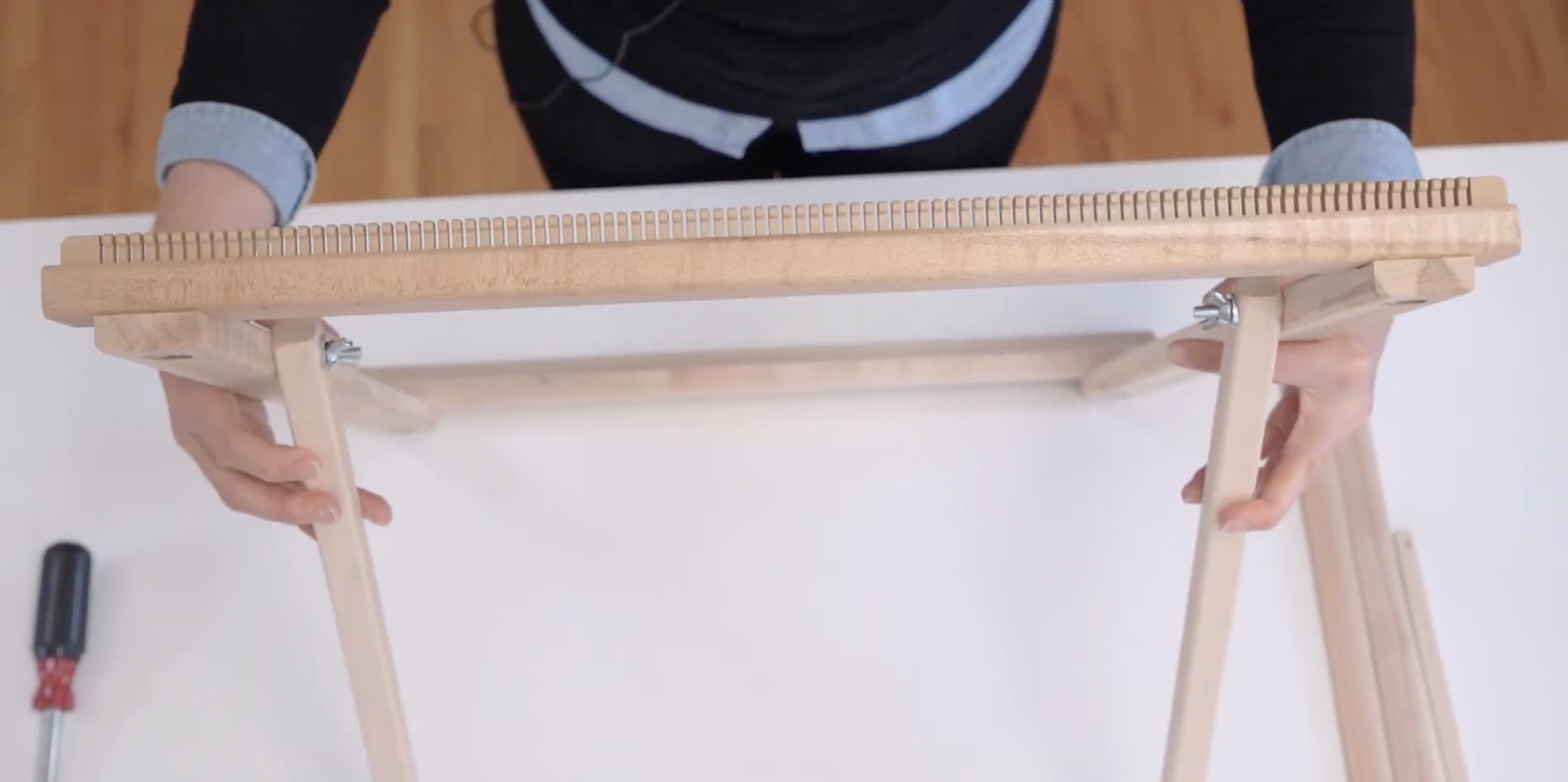
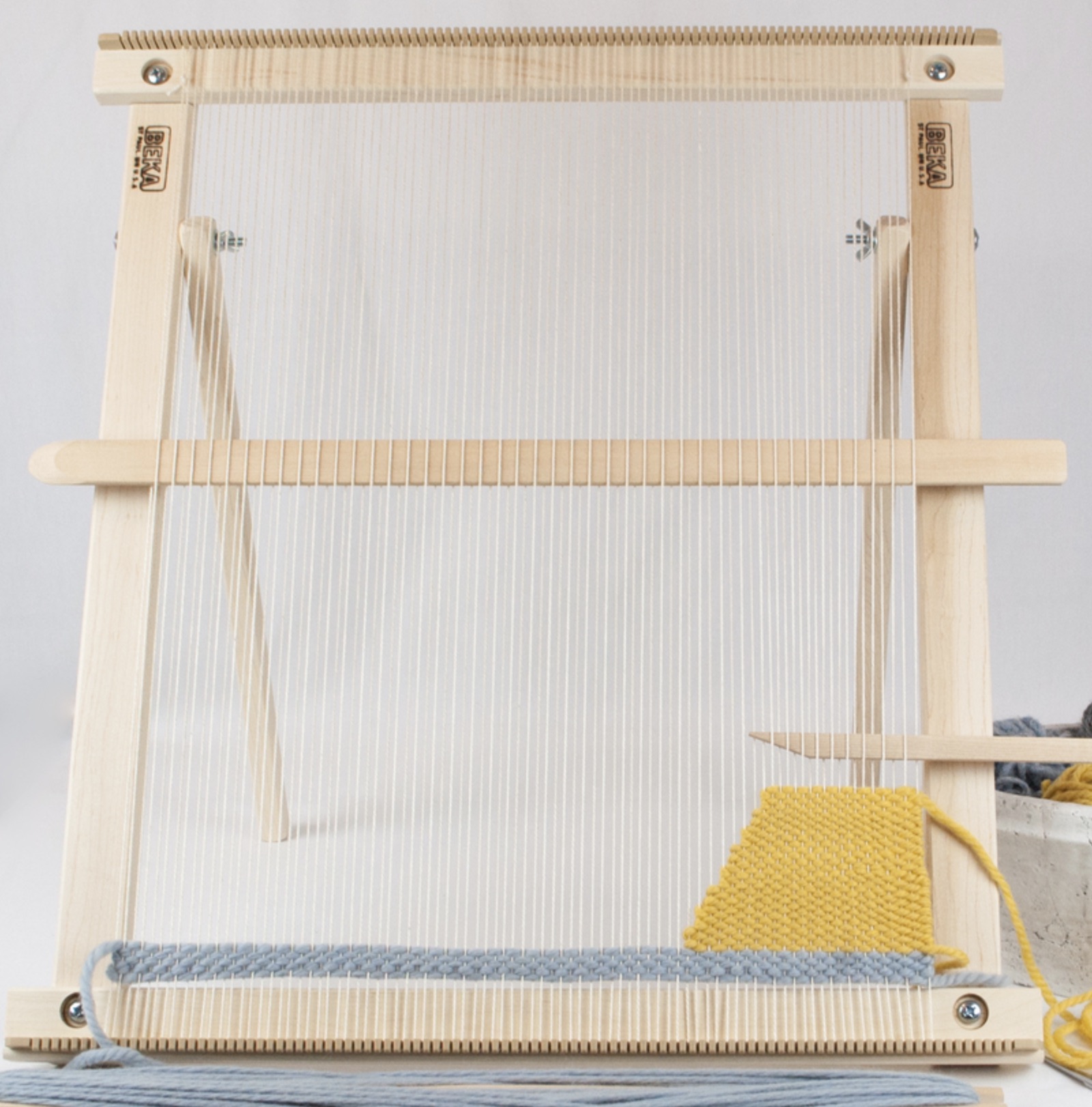
Some images from my research, to be better organized.
Takeaways:
Many frame/tapestry looms use "combs" rather than pins for warping. It's clean, requires no additional parts, but does seem a bit time consuming to cut, regardless of tool and jig used. But a comb doesn't need to be cut into the material, it could be made individually (3D printed or otherwise) and attached to the frame.
Worth noting that comb or pins can be oriented towards the upper face the frame, or top edge, there's no real reason it couldn't even be on the rear side.
5 teeth per inch seems to be a common comb density, but an ideal tpi could obviously vary based on yarn weight.